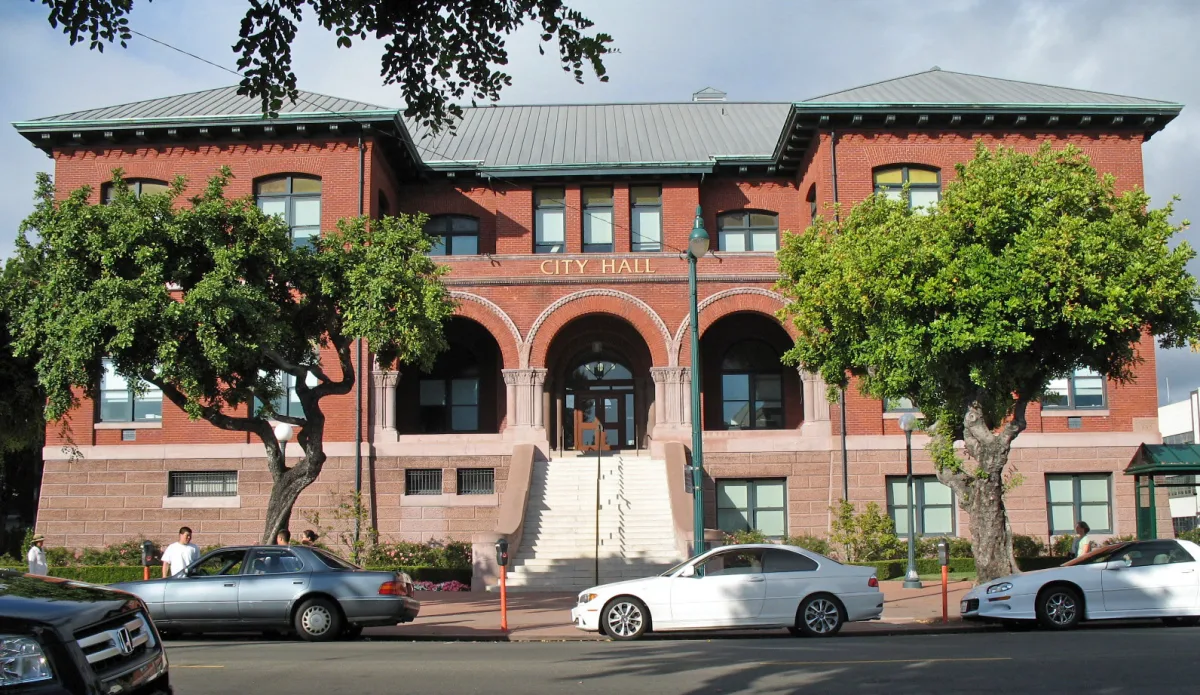
A report from the 2025-2026 Alameda County Civil Grand Jury, titled "A Call for Readiness: Improving the City of Alameda's Emergency Preparedness", examines how the island city of roughly 79,000 people prepared for and responded to two tsunami events: a July 2025 tsunami advisory issued after a magnitude 8.8 earthquake off the Russian coast, and a December 2024 tsunami warning issued after a magnitude 7.0 earthquake off the Northern California coast. The Grand Jury opened its investigation after receiving a complaint that the city failed to provide residents with evacuation notices or other information during the July 2025 advisory, noting that some Alameda neighborhoods feature "Tsunami Zone" street signs but that residents never received information about what to do in a tsunami.
Alameda is an island community in San Francisco Bay made up of Alameda and Coast Guard islands, part of Bay Farm Peninsula, and Ballena Isle, with 10.45 square miles of land and over 23 miles of shoreline, and much of its land at or near sea level, leaving it vulnerable to flooding and tsunamis. The city is a charter city with a council-manager government: a five-member city council, with four members elected at-large and a mayor elected separately, and a city manager appointed by the council who also serves as the city's director of emergency services.
An Emergency Plan Seven Years Out of Date
The Grand Jury found that while Alameda maintains a lengthy Emergency Operations Plan, or EOP, intended to serve as "the foundation for disaster response and recovery operations for the City of Alameda", the plan had not been updated as often as recommended. The most recent publicly available EOP prior to 2026 was issued in March 2019 and only minimally revised in 2022; an update prepared by consultants Atlas Planning Solutions was approved by the city council in April 2026 — the first update in seven years — even though the report states that best practice calls for updating EOPs every five years. As of May 1, 2026, the report notes, the new plan had not yet been posted on the city's website.
A Call for Readiness — Key Findings
- EOP update: approved by city council April 2026, the first update in seven years; best practice is every five years
- Training: no in-person disaster preparedness training conducted since 2019
- Siren system: Alameda has none, unlike neighboring Oakland and Berkeley
- AC Alert subscribers: approximately 20,000 of the city's more than 79,000 residents
- Testing: no discussion-based or operations-based exercises conducted to test emergency plans; no after-action reports prepared
The Grand Jury also found that the city had ignored EOP guidelines regarding the critical importance of regular testing of emergency plans and formal review of those tests: over the past several years, Alameda failed to conduct discussion-based and operations-based exercises to test its emergency plans, as required by its own EOP, and failed to prepare written after-action reports after informal testing or after actual emergencies, missing opportunities to evaluate and improve its response. The 2019 basic EOP had identified exercises as "a vital role in national preparedness by enabling whole community stakeholders to test and validate plans and capabilities and identify both capability gaps and areas for improvement."
Outreach Gaps and an At-Risk Registry
Since 2019, the report found, the city has not conducted any in-person emergency preparedness training, relying instead on its website to communicate the information. The city also maintains a voluntary database of residents needing additional help during a large-scale emergency, even though the report notes the Governor's Office of Emergency Services advises against such databases because they can create a false sense of security.
Conflicting Messages During Two Tsunami Events
During the December 2024 tsunami warning, the Grand Jury found, Alameda's fire department Twitter feed retweeted a tsunami warning from the state Office of Emergency Services but did not provide Alameda-specific information, while the police department's Twitter account posted nothing that day and neither did the city's Facebook page. During the July 2025 tsunami advisory, the city provided detailed information on its own website but its Facebook page contained only the National Weather Service's general tsunami advisory with nothing specific for Alameda residents, and there was no information about the advisory posted to the police or city Twitter/X accounts, according to the complaint the Grand Jury investigated.
The report found that "unlike neighboring cities, Alameda does not have a siren system to warn residents of disasters", noting that Oakland and Berkeley both maintain outdoor warning sirens, with Oakland using different siren sounds for different types of emergencies, while several witnesses told the Grand Jury the city has been actively exploring the idea. The city does have the ability to send emergency alerts by cell phone, landline, email, and text, and to post more detailed information on social media and city websites, but as of the investigation had approximately 20,000 AC Alert subscribers out of more than 79,000 residents.
"During tsunami warnings in 2024 and 2025, the city of Alameda's social media sites contained little, no, and at times inconsistent messages."
Recommendations
The Grand Jury's recommendations direct the City of Alameda to update its Emergency Operations Plan at least every five years; to conduct in-person emergency preparedness training within 90 days of receiving the report; to expand the reach of preparedness information through measures such as mailing postcards to all residents, distributing door hangers, and providing inserts in electric bills, also within 90 days; to replace its voluntary at-risk resident registry with direct partnerships with community groups representing those residents; to improve coordination among city, police, and fire social media accounts so all give consistent information during emergencies; to further explore installing an emergency siren system similar to those used by nearby cities; and to conduct and formally document, through after-action reports, exercises testing its emergency plans, including a new requirement that public safety agencies prepare after-action reports within 90 days of any event requiring activation of the Emergency Operations Center.
The report notes that Alameda's new 2026 EOP already addresses some of the problems the Grand Jury identified, including by adding emergency messaging templates for AC Alert, email notifications, and social media posts, developed with the help of a crisis communications consulting firm, and by requiring after-action reports for test exercises, though not yet for responses to actual emergencies.
DFP's Coverage
Dismal Freedom Press covers civil grand jury findings, municipal emergency management, and public agency accountability across San Joaquin, Stanislaus, and Merced counties and the East Bay as part of its Investigations desk.
If you have information about emergency preparedness or disaster response in Alameda or elsewhere in our coverage area, we want to hear from you.