
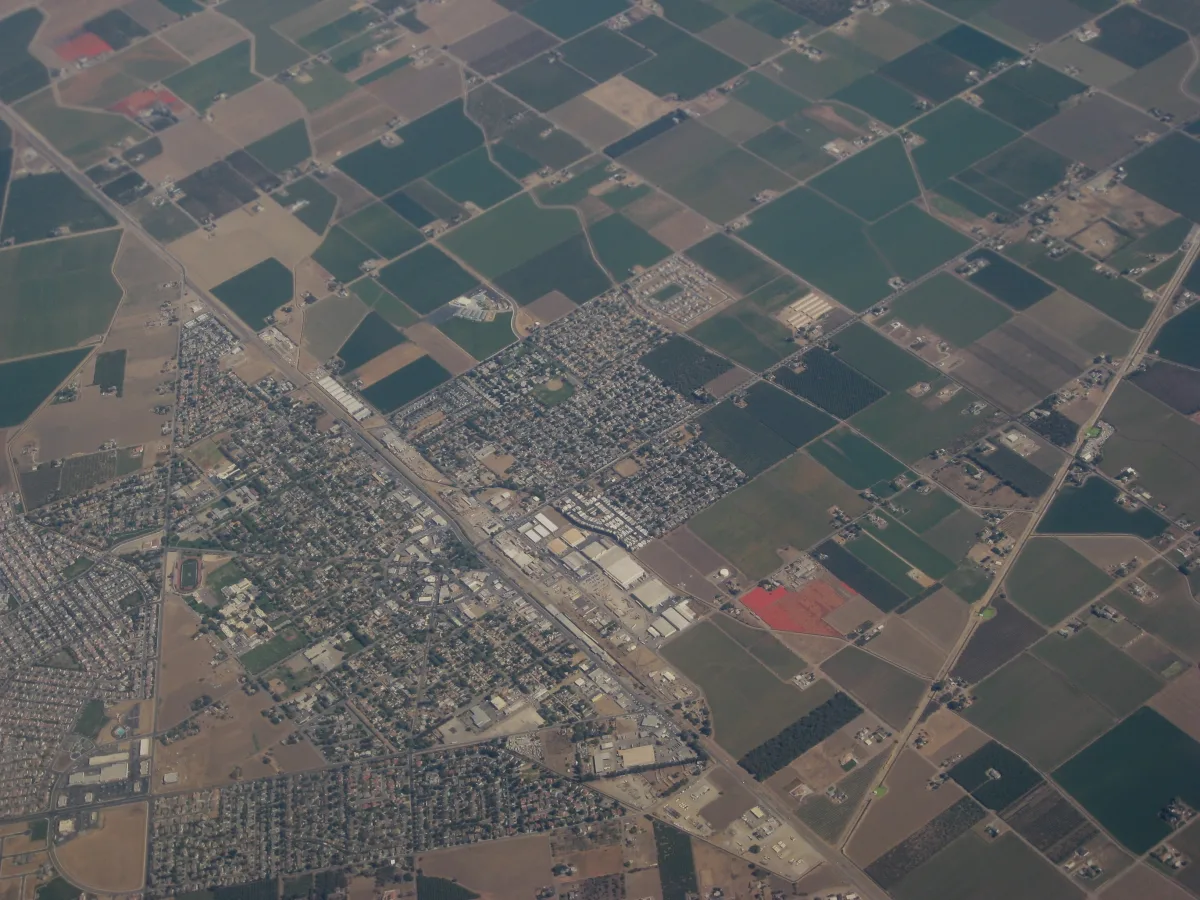
The U.S. Environmental Protection Agency has proposed giving the San Joaquin Valley — the eight-county air basin that includes San Joaquin County, Stockton, and Manteca — five additional years to meet a federal fine-particle pollution standard that was originally due to be met by the end of 2025. In a proposed rule published in the Federal Register on June 11, 2026, the EPA said it intends to extend the Serious-area attainment deadline for the 2012 annual PM2.5 standard from December 31, 2025, to December 31, 2030, based on a preliminary finding that California has met the legal conditions required for such an extension. The public comment period on the proposal closed July 13, 2026.
PM2.5, the fine particulate matter standard at the center of the proposal, is linked by the EPA's own notice to premature mortality and to aggravation of respiratory and cardiovascular disease, among other health effects, with older adults, people with heart and lung disease, and children identified as particularly sensitive to exposure. The current annual health standard, set in 2013, is 12.0 micrograms per cubic meter.
What's Actually Changing
Nothing about the pollution standard itself changes. What EPA is proposing to change is the legal deadline by which the eight-county San Joaquin Valley air basin must show it has met that standard — moving the target from the end of 2025 to the end of 2030.
Why Regulators Say the Old Deadline Wasn't Realistic
The San Joaquin Valley PM2.5 nonattainment area covers more than 23,000 square miles across all or part of eight counties — San Joaquin, Stanislaus, Merced, Madera, Fresno, Tulare, Kings, and the Valley portion of Kern — and is home to roughly four million people, according to the EPA's notice. The basin is partially enclosed by the Coast Range to the west, the Sierra Nevada to the east, and the Tehachapi Mountains to the south, meteorological and topographical factors the agency's notice says contribute to the Valley recording the highest annual ambient PM2.5 levels in the country despite its population.
Under the Clean Air Act, the San Joaquin Valley Unified Air Pollution Control District — working with the California Air Resources Board — is responsible for developing the plans that are supposed to bring the region into compliance. In 2024, the two agencies adopted the 2024 Plan for the 2012 Annual PM2.5 Standard, which included, alongside the pollution-control measures, a formal request to push the attainment deadline back to 2030. The District's governing board adopted the plan on June 20, 2024; CARB adopted it on July 25, 2024.
To justify an extension under the Clean Air Act, the state has to show that meeting the original deadline is "impracticable" even with the most stringent pollution controls in place, that it has complied with its existing plan commitments, and that its plan includes the toughest control measures used anywhere in the country. EPA's proposed rule walks through its review of each of those conditions and concludes, preliminarily, that the state's request meets them.
What the Monitors in Stockton and Manteca Actually Show
The EPA's notice includes the District's own air-quality modeling, projecting what pollution levels would look like in 2030 if the control measures in the 2024 plan are fully implemented. That modeling, reproduced in the federal filing, shows the following projected annual average PM2.5 concentrations at monitoring sites closest to DFP's coverage area:
| Monitoring Site | 2017 Design Value (µg/m³) | 2030 Projected Design Value (µg/m³) |
|---|---|---|
| Stockton | 12.21 | 10.16 |
| Manteca | 10.37 | 8.38 |
| Modesto | 11.16 | 8.54 |
Both figures are projections for 2030 under the plan's proposed control strategy — not current readings. The EPA's notice separately reports that, based on actual monitored data from 2023 and 2024, seven monitoring sites in the Valley (in the Fresno, Bakersfield, Hanford, and Visalia areas — none in San Joaquin County) recorded annual average PM2.5 concentrations still above the 12.0 microgram standard. The agency's analysis found that three of those sites would have needed 2025 annual averages 19 percent or more below their own historical lows to meet the original deadline — a bar the agency concluded was not achievable given the control measures already in place.
What Happens Next
The proposal is not final. EPA accepted written comments on the docket, identified as EPA-R09-OAR-2026-3665, through July 13, 2026. The agency's supplementary information notes this is not, in EPA's own classification, a significant regulatory action requiring White House budget-office review — a designation that affects how the rule moves through the federal process but does not by itself indicate when EPA will issue a final decision. The proposed rule was signed by Michael Martucci, identified in the filing as Acting Regional Administrator for EPA Region IX, on May 29, 2026.
If finalized, the extension would not change the pollution limit itself. It would give the District and CARB until the end of 2030 — rather than the end of 2025 — to demonstrate, through actual monitored air quality, that the Valley has met the 2012 annual PM2.5 standard.