
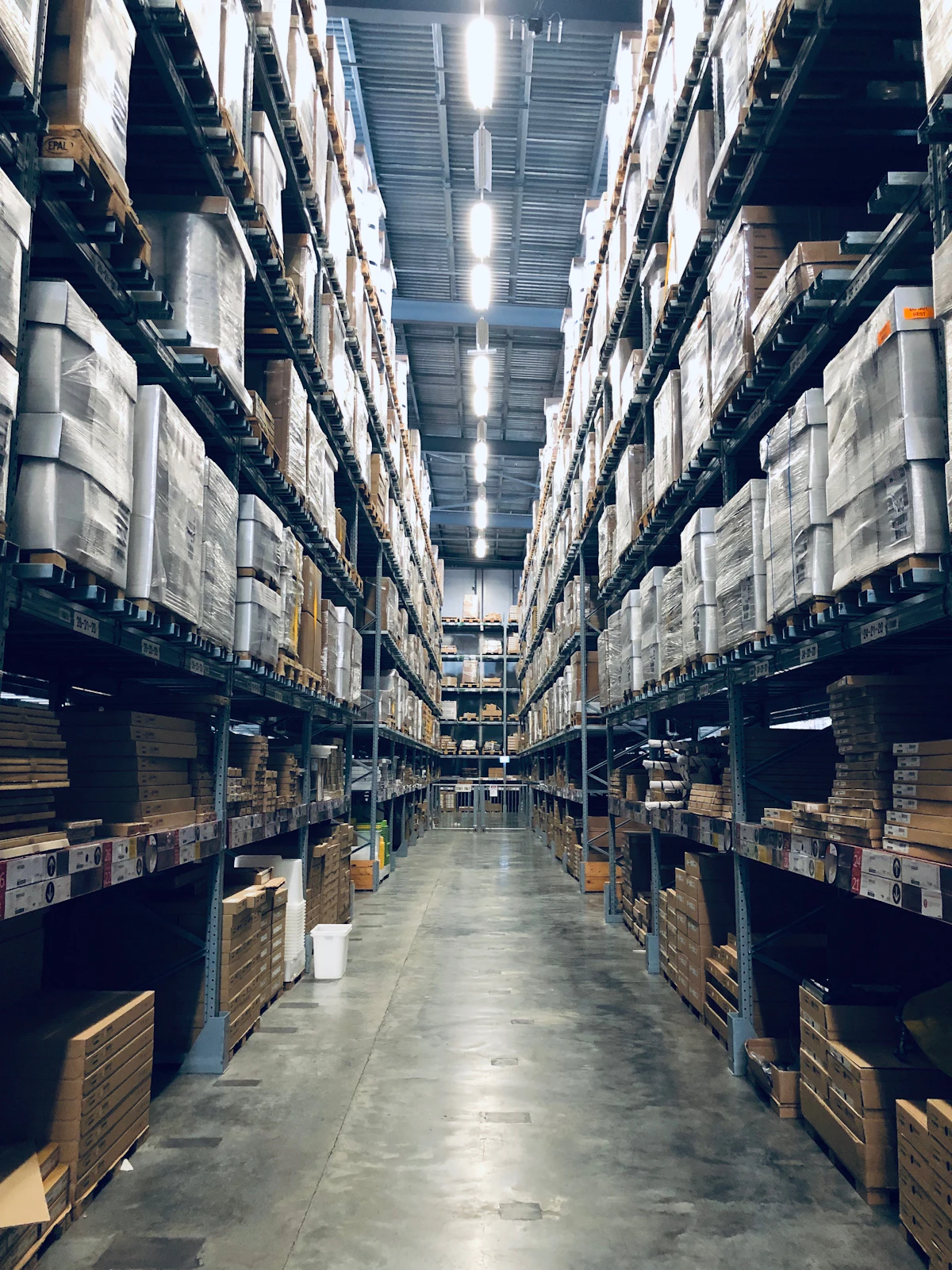
The safety handbook was 47 pages. It had the company logo on the cover, a signature line for new hires, and a section on pedestrian traffic lanes in the warehouse that described, in careful language, how workers on foot and forklift operators were supposed to share the floor.
What the handbook described and what a former worker at the Manteca-area fulfillment warehouse actually encountered were not the same place.
"The book said there were designated pedestrian lanes," said the worker, who asked not to be identified by name because they remain in the industry. "On paper, yes. In reality, forklifts went wherever the fastest route was. Nobody stopped them. Nobody was going to stop them."
Cal/OSHA's Title 8 Section 3664 requires that when pedestrian traffic and industrial truck traffic share a work area, the employer must establish and maintain clearly marked, physically separated traffic lanes. The regulation specifies a minimum aisle width of at least three feet wider than the largest equipment or load, or four feet for a two-way pedestrian path, and requires that markings be visible and maintained.
The company's policy described the general concept. It did not specify measurements, it did not require physical barriers or raised markings, and it contained no enforcement mechanism beyond asking workers to "remain aware of forklift activity."
That is not the same as complying with Section 3664. But the difference is invisible unless you read both documents side by side.
A Corridor Built for Volume
Manteca, Lathrop, and Tracy form the southern anchor of the San Joaquin Valley's logistics corridor — a dense strip of industrial parks, cross-dock facilities, and fulfillment centers that has absorbed tens of millions of square feet of new construction since 2018. Amazon, Aldi, and a succession of third-party logistics operators have opened facilities in the corridor. Warehousing and transportation is now San Joaquin County's largest employment sector by headcount, according to the California Employment Development Department.
The growth has created a structural problem for Cal/OSHA. The agency's Stockton district office is responsible for workplace safety enforcement across San Joaquin, Stanislaus, and several surrounding counties. The number of inspectors has not grown proportionally to the number of facilities. According to the agency's own annual reports, Cal/OSHA conducted approximately 2,100 inspections statewide in fiscal year 2023–24 — a fraction of the state's estimated 1.2 million workplaces.
In practice, this means the primary mechanism by which most warehouse workers encounter Cal/OSHA is not a proactive inspection but a complaint. A worker calls the agency's 800 number, or submits an online form, describing unsafe conditions. Cal/OSHA opens a complaint file. The employer may receive an inspection, or may receive a letter asking them to self-certify that conditions have been corrected.
For workers at facilities with production quotas — the kind of electronic performance monitoring now standard in large fulfillment operations — filing that complaint is not cost-free.
The Policy That Described a Different Workplace
DFP obtained Cal/OSHA enforcement records for warehouse facilities in San Joaquin County through a California Public Records Act request filed in January 2026. The records, covering inspections from 2022 through mid-2025, show 34 citations classified as serious or repeat at warehouse operations in the county. The most frequently cited standards were ergonomic risk factors (Title 8 Section 5110), heat illness prevention (Title 8 Section 3395), and material handling and storage (Title 8 Section 3276).
The records do not identify employers by trade name in all cases — Cal/OSHA citations list the legal entity that holds the operating registration, which in many cases is a limited liability company or a staffing agency rather than the brand name on the building. DFP is continuing to cross-reference the legal entity names with county assessor records and Secretary of State business registrations to identify which facilities received which citations.
What the records reveal is a pattern that enforcement officials and worker advocates describe consistently: companies tend to have written policies that address the topics regulated by Cal/OSHA standards without matching the specific, measurable requirements those standards impose.
"We see it constantly," said a former Cal/OSHA compliance officer who worked in the Central Valley before leaving for the private sector and who spoke on background. "The employer has a binder. It says 'heat illness prevention.' It has a section on water and shade. But the water is in one location on a 400,000-square-foot floor, and the shade structure is outside a building where the temperature is 108 degrees inside. That's not compliance with 3395. The binder says it is."
What AB 701 Changed — and Didn't
California's Assembly Bill 701, signed into law in September 2021 and effective January 1, 2022, was the first state law in the country to specifically regulate warehouse production quotas. It requires covered employers — those with 100 or more warehouse workers at a single site, or 1,000 or more statewide — to disclose to workers in writing the work speed quota they are subject to, how performance is being measured, and what the consequences of failing to meet the quota are.
The law also prohibits employers from setting quotas that prevent workers from taking rest periods, meal breaks, or bathroom breaks as required under existing California labor law, and it creates a presumption of retaliation if a worker is disciplined within 90 days of raising a quota-related complaint.
In practice, enforcement of AB 701 in San Joaquin County has been limited. The Labor Commissioner's office, which has enforcement jurisdiction, confirmed to DFP in response to a separate CPRA request that it had opened four AB 701 enforcement investigations in San Joaquin County between 2022 and the end of 2025. Three of those investigations were closed without citation. One resulted in a settlement, the terms of which the agency said were confidential.
Workers interviewed by DFP at facilities in the Manteca-Lathrop corridor described conditions that appear to conflict with AB 701's requirements. Two workers said they had received quota notifications that described daily unit targets but did not specify how performance was being measured or what data sources the employer used. One worker said she had been called in for a performance review after taking a bathroom break she described as lasting longer than usual during a high-volume shift.
"They have a policy that says they follow the law," she said. "They gave me paperwork. But when you're on the floor and the scanner is tracking you and your numbers are down, you don't feel like the law is there."
"The binder says it is compliance. That's not the same as compliance."
— Former Cal/OSHA compliance officer, Central Valley district, speaking on backgroundReading the Gap: A Practical Guide
The difference between a company safety policy and a Cal/OSHA standard is publicly verifiable. California's Title 8 regulations are available in full at dir.ca.gov, organized by section number. Every specific standard — from forklift aisle widths to the temperature threshold at which employers must provide cool-down areas — is written in the regulation, not just implied. Cal/OSHA also publishes enforcement guidance documents, called "Consultation Letters" and "Policy and Procedures Memoranda," that explain how inspectors are instructed to interpret and apply each standard.
Workers who want to check whether their employer's policy meets the actual legal requirement can take several steps. First, obtain the company's written safety policy in the relevant area — employers are required to provide this on request under Labor Code Section 6400 et seq. Second, locate the corresponding Title 8 standard at dir.ca.gov and compare the specific, measurable requirements in the regulation against the language in the company document. Third, if there is a discrepancy, document it in writing — note the date, the specific policy language, and the specific regulatory requirement — before filing any complaint.
Filing a complaint with Cal/OSHA does not require a worker to identify themselves. Anonymous complaints are accepted and are supposed to receive the same investigative response as identified complaints, though worker advocates note that facilities where a single individual would plausibly be the complainant are situations where effective anonymity is harder to maintain.
Retaliation complaints are handled separately by the Division of Labor Standards Enforcement. Workers who believe they have been retaliated against for a safety complaint have 6 months from the retaliatory action to file a complaint under Labor Code Section 6310. The DLSE's filing portal is at dir.ca.gov/dlse.
The Same Gap, Across the Bay Area
The pattern DFP documented in the Manteca-Lathrop corridor is not unique to the 209. Cal/OSHA's Oakland district office has cited East Bay warehouse and last-mile distribution operations in Hayward, Oakland, and San Leandro for similar discrepancies between written safety policies and conditions on the floor — particularly around forklift-pedestrian separation and heat illness prevention in older industrial buildings retrofitted for e-commerce fulfillment. Hayward's industrial belt along Whipple Road and Oakland's port-adjacent logistics zone share the same structural mismatch: rapid square-footage growth, a workforce that turns over quickly, and an enforcement agency stretched thin.
The North Bay shows a parallel dynamic. In Solano County — including Fairfield, Vacaville, and Vallejo — the build-out of regional distribution capacity along the I-80 corridor has produced its own cluster of AB 701 complaints and ergonomic citations. Worker advocates in Vallejo, where the city's 2008 bankruptcy left a long shadow on municipal enforcement capacity, told DFP that the same handbook-versus-reality gap appears in 707 facilities. The Tri-Valley and East Contra Costa corridor — Pleasanton, Livermore, Brentwood, Antioch, Pittsburg — likewise sits inside the same Cal/OSHA enforcement footprint, where Antioch's logistics operators have drawn complaints that mirror those filed in Manteca.
What changes between 209, 925, 707, and 510 is the building stock and the workforce composition. What stays the same is the gap between what the binder says and what happens on the floor.
What DFP Is Continuing to Investigate
This article is a first-stage explainer built on records DFP has obtained to date. We are continuing to cross-reference Cal/OSHA citation records with business registration data to identify which Manteca-corridor facilities received serious or repeat citations. We are also reviewing AB 701 quota disclosure forms obtained from workers at multiple facilities to assess whether the disclosures meet the statute's requirements.
If you work in a warehouse or logistics facility in San Joaquin, Stanislaus, or San Joaquin County and have direct knowledge of a gap between your employer's written safety policy and actual shop-floor conditions — including documentation such as a quota notification, a performance review, an incident report, or a safety complaint response — DFP wants to hear from you.
We protect source confidentiality. You can reach us at dismalfreedom.press/tips through our encrypted tips portal, or by calling our tip line at (209) 425-2677.